
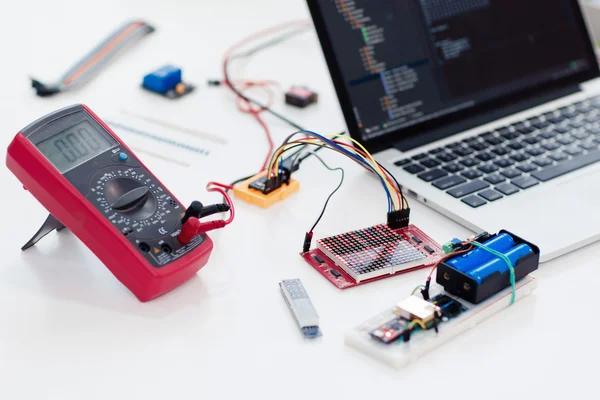
Accredited calibration services play a crucial role in ensuring the accuracy and reliability of measurement instruments, both on-site and in laboratory settings. These services are essential for maintaining compliance with industry standards, enhancing product quality, and ensuring safety across various sectors such as manufacturing, healthcare, aviation, and telecommunications. Calibration is the process of configuring an instrument to provide results within an acceptable range. Accredited calibration service providers have been evaluated by recognized accreditation bodies to ensure they meet specific technical competence requirements.
On-site calibration offers significant advantages for businesses that require minimal downtime or cannot afford to transport their equipment to a laboratory. This type of service allows technicians to perform calibrations at the client’s facility using portable equipment. It is particularly beneficial for industries where large or immovable machinery needs regular maintenance without disrupting operations. On-site calibration ensures that instruments are tested under actual working conditions, providing more relevant data about their performance.
In contrast, laboratory calibration involves sending instruments to a controlled environment where highly precise measurements can be made using advanced technology and standardized procedures. Laboratories accredited by organizations like ISO/IEC 17025 demonstrate a high level of competency in testing and calibration activities. The controlled environment minimizes external variables that uncover details could affect results, leading to higher precision levels than those typically achievable on-site.
Both on-site and laboratory calibrations offer unique benefits tailored to different operational needs. While on-site services prioritize convenience and real-world applicability, lab-based calibrations focus on achieving the highest possible accuracy through sophisticated techniques and controlled settings.
Choosing an accredited provider assures clients that they are receiving top-tier services backed by rigorous quality controls. Accreditation bodies assess providers based on their ability to produce valid results consistently over time while adhering strictly to international standards such as ISO/IEC 17025 or ANSI/NCSL Z540-1-1994 (R2002). This certification process includes regular audits covering everything from personnel qualifications to equipment maintenance protocols.
The importance of using accredited calibration cannot be overstated; it not only helps companies avoid costly errors but also bolsters customer confidence in their products’ reliability—a vital factor when competing globally where even minor discrepancies can lead to significant financial losses or reputational damage.
In conclusion, whether opting for convenient on-site solutions or precise laboratory analysis depends largely upon individual business requirements; however one constant remains: partnering with an accredited provider guarantees adherence not just towards meeting regulatory obligations but exceeding them—ultimately fostering trustworthiness within any given marketplace whilst driving innovation forward responsibly through accurate measurement assurance practices integral today’s technologically driven world economy thrives upon daily basis without fail whatsoever might come its way tomorrow next year decade ahead future generations alike benefit accordingly too!